
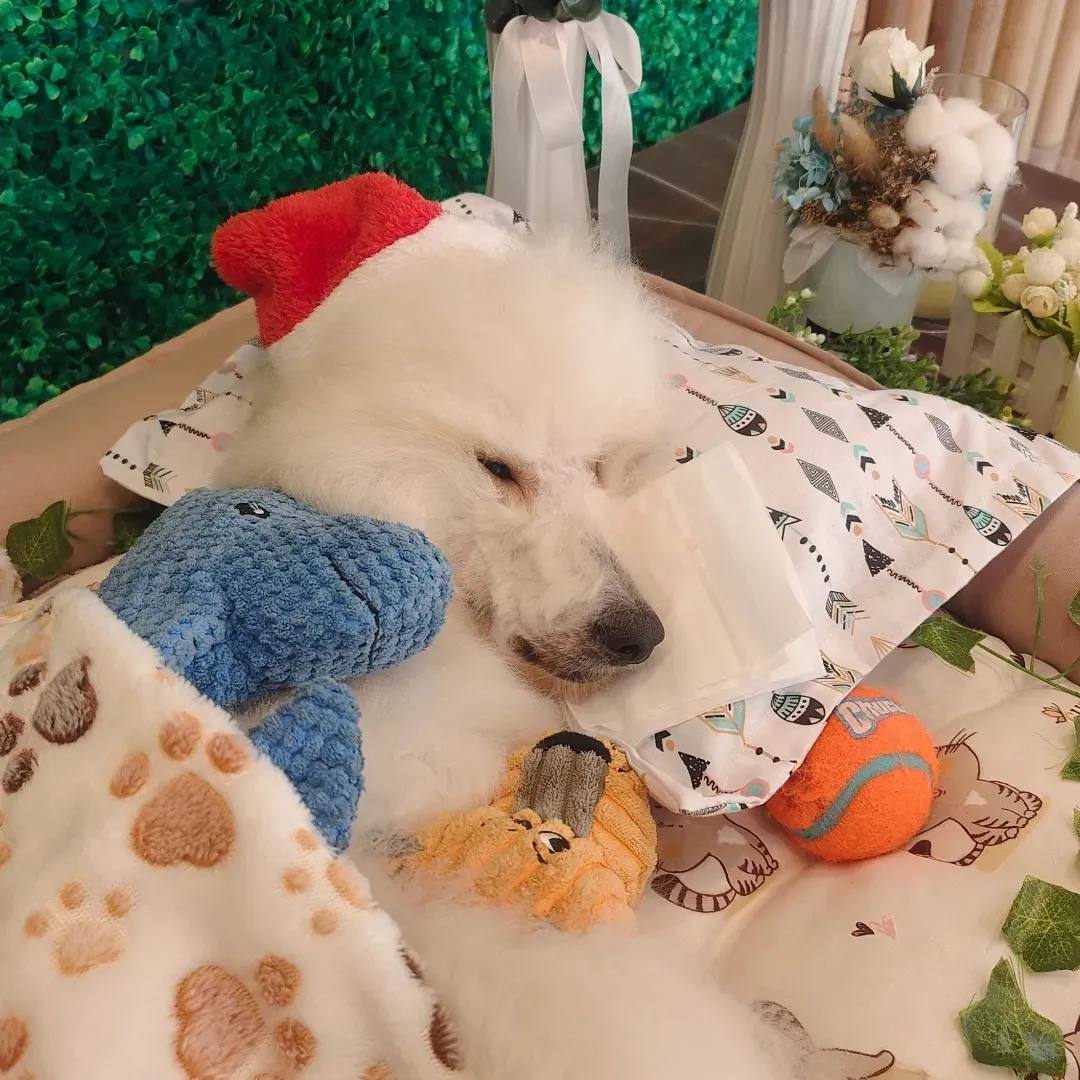
What Happens to Your Pet’s Collar, Blanket, or Favorite Belongings After They Pass Away?
When a beloved pet passes away, what remains is not only photographs and memories.
There may be the collar they always wore. The blanket they slept on every night. A favorite toy covered in bite marks. A small outfit they used to wear when going out. Even their food bowl may still be sitting in its usual place.
To someone else, these items may seem ordinary.
But to a family who has just lost a pet, a small object such as a collar or blanket can hold years of memories.
As someone who has worked in the pet industry for more than 15 years, I understand that one of the most emotional questions after losing a pet is:
“What should we do with all of their belongings now?”
If the family chooses Pet Aquamation, another question often comes up:
“Can the collar, blanket, or favorite toy stay with the pet during the aquamation process?”
The answer depends on the type of item and the facility’s policies. However, in general, personal belongings should be separated and documented before the aquamation process begins, especially if they contain non-organic materials.
Why Do a Pet’s Belongings Feel So Meaningful After They Are Gone?
During everyday life, we often do not realize how strongly certain objects become connected to a pet’s habits and personality.
A collar is no longer just a collar when you can still remember the small sound it made whenever your pet walked across the room.
A blanket is not just a piece of fabric when you still remember exactly where they loved to sleep.
Even an old, damaged toy can become deeply meaningful because it was once part of their daily routine.
This is why many families choose not to throw away their pet’s belongings immediately after they pass away.
There is no rule about when a family should pack away, store, donate, or let go of these items.
Everyone grieves differently and at their own pace.
Can a Pet’s Collar Stay on During Pet Aquamation?
At many Pet Aquamation facilities, the collar is usually removed before the aquamation process begins.
This is because collars may contain various non-organic materials, such as:
Metal
Plastic
Nylon
Synthetic leather
Buckles
Identification tags
Bells
GPS trackers
Pet Aquamation primarily works on organic tissue through a process called alkaline hydrolysis, using a combination of water, alkali, controlled temperature, and circulation.
Because of this, materials such as metal and plastic are not treated in the same way as body tissue.
Collars, name tags, and other accessories can usually be returned to the family and kept as memorial items.
However, each provider may have different procedures, so it is always best to let the team know in advance if there is a specific item you want returned.
What About a Favorite Blanket or Piece of Fabric?
Many families bring their pet to a pet aftercare facility wrapped in a favorite blanket.
This is completely understandable.
A familiar blanket can provide emotional comfort during the final journey and can also help the family feel that their pet is still surrounded by something that was part of their daily life.
However, this does not mean that every type of fabric can go through the aquamation process.
Blankets may contain:
Synthetic fibers
Polyester
Rubber
Zippers
Buttons
Decorative materials
Waterproof layers
For this reason, blankets are often used during pickup, storage, or the farewell ceremony, and then removed before aquamation if the material is not suitable for processing.
If you want the blanket returned after the farewell, tell the team in advance.
Can a Favorite Toy Stay with the Pet?
A favorite toy often says a lot about a pet’s personality.
Some dogs carry the same ball everywhere.
Some cats ignore dozens of toys but become attached to one small stuffed animal.
Some senior pets continue sleeping beside the same toy they have had for years.
Because of this emotional connection, families sometimes want to place the favorite toy next to their pet during the farewell.
This can often be discussed with the provider.
However, toys cannot always be included in the aquamation process, especially if they contain:
Plastic
Rubber
Metal
Batteries
Electronic components
Squeakers
Synthetic fibers or mixed materials
A more meaningful option may be to let the toy stay beside your pet during the farewell, then take it home afterward as part of the family’s memorial.
What About Clothes, Harnesses, or Accessories?
Clothes, harnesses, bandanas, ribbons, and other accessories should also be checked before aquamation begins.
Many accessories contain components such as buckles, Velcro, plastic, or metal.
Because of this, families should not assume that every item can go through the process.
If there is something especially important to you, tell the team clearly so the item is not accidentally misplaced, discarded, or processed.
What Happens to a Pet’s Name Tag?
A name tag is one of the simplest memorial items, yet it can carry enormous emotional value.
It may display the pet’s name, the family’s phone number, or other details that have been part of their identity for years.
Instead of being processed, the name tag can be kept as a memorial.
Some families choose to:
Keep it next to the urn
Place it in a memorial frame
Turn it into a keychain
Store it inside a memory box
Display it together with a photograph and paw print
A small item like this can become a physical reminder of a life once shared.
Which Pet Belongings Should You Keep as Memorial Items?
You do not have to keep everything.
However, if you are not ready to decide, there is nothing wrong with storing a few meaningful items first.
Some belongings that often hold strong sentimental value include:
Collar or harness
Name tag
Favorite toy
Blanket
Favorite clothing
Food or water bowl
Brush or grooming tools
Photographs
Paw print
A small fur clipping, if desired
These items can later be arranged into a memory box or a memorial corner at home.
What Is a Pet Memory Box?
A memory box is a special container used to keep meaningful belongings connected to a pet.
It does not need to be expensive or complicated.
A memory box may include:
Favorite photographs
Collar
Name tag
Paw print
Fur clipping
A letter from the family
A small favorite toy
Memorial certificate
Other meaningful objects
Some families even write a letter to their pet and place it inside the box.
The purpose is not to make the family feel sad forever.
A memory box provides a special place to preserve memories, so personal items do not feel like things that must immediately be thrown away.
Do You Have to Pack Away Your Pet’s Belongings Immediately?
No.
There is no right or wrong timing.
Some families feel calmer after organizing their pet’s belongings soon after the loss.
Others may need several weeks or even months before they feel ready to move the food bowl or bed.
Both responses are completely normal.
If you are not ready, you do not have to make a decision immediately.
You can gather the belongings in one place first and decide later which items you would like to keep, donate, or give away.
What If You Want to Donate Your Pet’s Belongings?
Not every item needs to be kept forever.
Some families find comfort in donating their pet’s belongings so that another animal can benefit from them.
Items that are still in good condition may be donated to:
Animal shelters
Rescue organizations
Foster homes
Pet communities
Friends or family members with pets
Veterinary clinics or organizations that accept pet supplies
Make sure the items are cleaned first and are still safe to use.
For medications or specialized food, it is best to check with a veterinarian or the receiving organization before donating them.
Which Items Should You Avoid Throwing Away Too Quickly?
During the first few days after losing a pet, emotions can be very intense.
Because of this, it may be wise to avoid immediately discarding irreplaceable items such as:
Name tags
A first collar
Paw prints
Printed photographs
A highly recognizable favorite toy
Custom items with the pet’s name
Certain medical records or documents
If you are unsure, keep the item for now.
You can always decide later whether to keep, donate, or let it go when you feel more emotionally ready.
How Should a Professional Pet Aftercare Provider Handle Personal Belongings?
Professional pet aftercare is not only about the technical process after a pet passes away.
It is also about identification, communication, traceability, and attention to the small details that matter to the family.
When a pet is picked up, families should be able to clearly explain which items are traveling with them.
For example:
“We would like this collar returned to us.”
or:
“This toy can stay beside our pet during the farewell, but please do not include it in the aquamation process.”
Instructions like these should be documented by the team.
A clear tracking system helps reduce the risk of sentimental belongings being misplaced or lost.
What Should You Ask a Pet Aquamation Provider?
Before the process begins, you may want to ask:
Does the collar need to be removed before aquamation?
Can the blanket stay with the pet during the farewell?
Can a favorite toy be placed next to the pet?
Which items cannot go through the aquamation process?
Will the collar, name tag, and accessories be returned?
How are the pet’s personal belongings identified and tracked?
Are paw prints, fur keepsakes, or memory boxes available?
When should the family specify which belongings they want to keep?
The clearer the communication is from the beginning, the lower the risk of misunderstandings.
Pet Aquamation and Pet Aftercare in Jakarta and Greater Jakarta
For families in Jakarta, Bogor, Depok, Tangerang, and Bekasi, choosing a pet aftercare service often happens during an emotional time.
Because of this, small details such as a collar, blanket, or favorite toy should never be treated as unimportant.
Tell the team clearly if there are belongings you want to:
Have returned
Use during the farewell
Keep as memorial items
Keep out of the aquamation process
A professional provider should explain the procedures transparently, from pickup through the return of the memorial remains.
Because Sometimes, Small Objects Hold the Biggest Memories
One day, you may open a drawer and find a small collar that is no longer being worn.
Or you may see the toy that used to be carried through every corner of the house.
At that moment, the object may no longer feel like just an object.
It becomes a reminder of the sound of their footsteps.
Of their little habits.
Of the way they waited by the door.
And of the years of love that once filled your home.
Pet Aquamation and pet aftercare are not only about how we care for a pet after they are gone.
They are also about how we preserve the stories, belongings, and memories they leave behind.
Because even when they are no longer physically beside us, small pieces of the life we shared with them can still remain at home.