
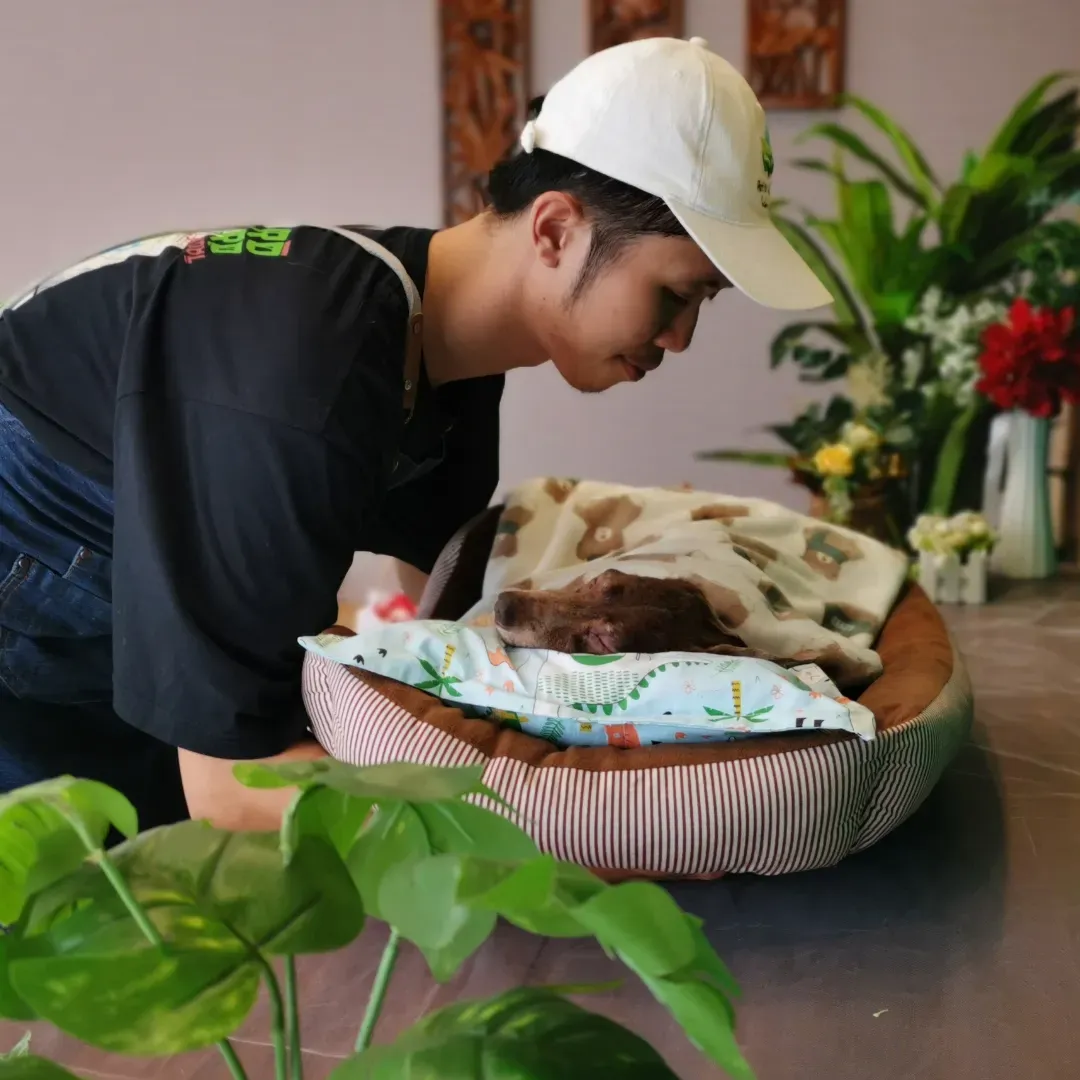
How to Prepare Your Pet for a Final Farewell Before Pet Aquamation
When a beloved pet passes away, families are often in a deeply emotional state.
There may be sadness, confusion, and sometimes disbelief that only hours earlier, they were still at home with us.
In the middle of that moment, a very practical question often comes up:
“What should I do before my pet is taken for Pet Aquamation?”
As someone who has worked in the pet industry for more than 15 years, I understand that preparing a pet for their final journey does not mean doing anything complicated.
The most important things are to handle your pet gently, keep their body in a suitable condition, prepare any belongings or memorial items you want to keep, and clearly communicate your wishes to the pet aftercare provider.
If possible, aftercare decisions are often easier when they are discussed before an emergency happens. This can include planning how the body will be handled, transported, and whether the family would like memorial items such as paw prints or fur keepsakes.
What Does “Preparing” a Pet Before Aquamation Mean?
Preparing your pet does not mean the family needs to perform medical procedures or excessive cleaning.
It usually means taking a few simple steps such as:
Placing your pet in a comfortable position
Keeping the body in a cool environment
Using a clean blanket or absorbent pad
Choosing items you would like to include during the farewell
Deciding which belongings you want returned
Preparing a paw print or fur keepsake if desired
Informing the provider about implants or medical devices
Confirming the type of aquamation service
Verifying your pet’s identification details
Giving family members time to say goodbye
The purpose is not to make the farewell feel formal.
It is to reduce the number of difficult decisions the family needs to make after the pet has already been taken into aftercare.
1. Give Yourself Time to Say Goodbye
If your pet passes away at home and the situation allows it, you do not necessarily need to move them immediately.
Give the family some time.
Sit beside them.
Gently stroke their head.
Talk to them the way you normally would if that brings comfort.
Some families choose to pray together, play familiar sounds, take a final photograph, or simply sit quietly.
There is no single right or wrong way to say goodbye.
What matters is allowing yourself and your family the space to have that final moment together.
2. If Your Pet Passes Away at Home, Keep the Body Cool
After death, natural changes in the body begin to occur.
Because Indonesia has a warm climate, it is best not to leave the body in a hot environment for too long.
Place your pet in a cool or air-conditioned room and contact a veterinarian or pet aftercare provider as soon as possible.
A clean blanket, towel, or absorbent pad can be placed underneath the body while transportation or pickup is being arranged.
For families in Jakarta and Greater Jakarta, where the weather is often warm and humid, keeping the body cool is especially important if pickup cannot happen immediately.
3. Use a Clean Blanket or Absorbent Layer
You can place your pet on:
A favorite blanket
A clean towel
An absorbent pad
A soft cloth
A pet bed that is easy to move
It is normal for a small amount of fluid to be released from the body after death, so an absorbent layer can help keep the area clean.
If the blanket has sentimental value and you want it returned after the farewell, tell the Pet Aquamation team clearly.
Do not assume that every item arriving with your pet will automatically be returned.
You can simply say:
“We would like this blanket returned to us after the farewell.”
4. Position Your Pet Gently
If your pet has only recently passed away and the body is still flexible, you may place them in a natural resting position.
For example:
Lying on their side
Resting their head on a small pillow
Keeping the legs in a comfortable position
Partially wrapping the body in a blanket
After some time, the body may develop rigor mortis, or post-death stiffness.
If this has already started, do not force the legs, neck, or body into another position.
The most important thing is to handle your pet gently and respectfully.
5. Does Your Pet Need to Be Bathed Before Aquamation?
Usually, no.
Families do not need to bathe their pet before Pet Aquamation.
If there is a small amount of dirt on the coat, you may gently wipe it with a soft damp cloth.
However, there is no need to perform extensive grooming if it feels uncomfortable or stressful.
If you would like your pet to be groomed before the farewell, ask whether the aftercare provider offers that service.
Some families prefer their pet to look exactly as they usually did.
Others prefer the coat to be tidied before the final farewell.
Both are personal choices.
6. Decide Whether the Collar Will Stay On During the Farewell
A collar is often one of the most sentimental belongings a family has.
It is perfectly understandable if you want your pet to wear it during the farewell.
However, before aquamation begins, collars or accessories may need to be removed because they can contain:
Metal
Plastic
Nylon
GPS trackers
Bells
Buckles
Electronic trackers
Tell the team if you want the collar returned.
You may also choose to remove it at home and keep it as a memorial item from the beginning.
7. Choose Any Items You Want Beside Your Pet During the Farewell
Some families feel more comfortable when their pet is surrounded by something familiar.
For example:
A favorite blanket
A favorite toy
A small stuffed animal
Flowers
A family photo
A letter
A favorite bandana
These items may be placed beside your pet during the farewell if the facility allows it.
However, do not assume that every item can go into the aquamation system.
Toys containing plastic, batteries, electronics, metal, or mixed materials usually need to be removed.
Ask the team:
“Which items can stay during the farewell, and which items need to be removed before aquamation?”
8. Prepare Keepsakes Before Aquamation If You Want Them
After aquamation is completed, some keepsakes can no longer be created.
For this reason, it is helpful to decide in advance whether the family wants:
Paw Print
A paw print can be made using ink, clay, or another memorial material.
Fur Keepsake
A small amount of fur can be clipped and stored in a vial, frame, or memory box.
Nose Print
Some facilities may also offer a nose print as a memorial keepsake.
Final Photograph
Some families want one final photo before the farewell.
Not every family wants this, and there is no obligation to do it.
But if you are unsure, it is better to ask before aquamation begins, because the opportunity cannot be recreated afterward.
9. Tell the Team About Implants or Medical Devices
If your pet previously underwent surgery, provide whatever information you know.
This may include:
Microchip
Plate
Screw
Pin
Orthopedic wire
Joint implant
Electronic medical device
Other surgical devices
You do not need to know every technical detail.
It is enough to say something like:
“My pet had leg surgery before and may still have a metal plate inside.”
This information helps the team determine how non-organic materials should be handled during the process.
10. Decide Between Private or Communal Aquamation Before the Process Begins
This is one decision that should be clear before your pet enters the aquamation stage.
If the family wants individual memorial remains returned, ask specifically about Private Aquamation.
If you are considering a communal service, ask how the facility handles the remains and whether individual remains are returned.
Do not rely only on the name of the package.
Ask clearly:
“Will my pet’s memorial remains be returned individually?”
That question is much more specific.
11. Make Sure Your Pet’s Identification Details Are Correct
Before your pet leaves home or when they are received by the facility, check information such as:
Pet’s name
Owner’s name
Species
Breed
Sex
Weight, if required
Contact number
Type of service selected
Urn selection
Keepsakes requested
Personal belongings that must be returned
Professional pet aftercare should have an identification and tracking system that follows the pet throughout the process.
This is an important part of traceability and chain of custody.
12. Write Down Any Special Requests
When people are grieving, it is easy to forget small details.
If you have specific requests, write them down.
For example:
Return the collar.
The blanket may stay during the farewell, but please do not include it in the aquamation process.
Please take a small fur clipping before the process.
We would like two paw prints.
Please place the name “Mochi” on the urn.
Written instructions help both the family and the aftercare team work from the same information.
13. Involve Children or Other Family Members According to Their Comfort Level
If your pet lived with the whole family, the loss may also be deeply felt by children or other family members.
Give them choices rather than forcing them to participate.
Some family members may want to see the pet one last time.
Some may want to write a letter.
Some may want to place flowers beside them.
Others may prefer to remember the pet as they were when alive.
All of these choices are valid.
The goal is not to create a perfect farewell.
The goal is to allow each person to say goodbye in a way that feels right for them.
14. Do Not Feel Pressure to Create a “Perfect” Farewell
After seeing memorial ceremonies online, families may feel as though they need:
Flowers.
Decorations.
The perfect photo.
A long letter.
A formal ceremony.
But none of that is required.
Your pet does not need a perfect farewell.
A simple moment where the family sits together, gently touches them, and says thank you can be deeply meaningful.
What matters most is not how elaborate the farewell looks.
What matters is having the chance to be present and say goodbye.
15. What Should You Avoid Before Pet Aquamation?
There are several things families should avoid:
Do not leave the body in a hot environment for too long.
Do not force the body into a new position once stiffness has begun.
Do not place electronics or batteries with the pet without informing the team.
Do not assume all toys, clothes, or blankets can go through aquamation.
Do not forget to disclose known implants or medical devices.
Do not leave sentimental belongings without clear instructions about whether they should be returned.
Do not approve the process before understanding whether the service is private or communal.
And most importantly:
Do not be afraid to ask questions.
This is your pet.
Your family has the right to understand what will happen next.
Checklist Before Your Pet Is Picked Up for Pet Aquamation
Before the aftercare team arrives, you can use this simple checklist:
Place your pet in a cool environment.
Use a clean blanket, towel, or absorbent pad.
Position the body naturally without forcing movement.
Decide which collar or accessories you want to keep.
Choose any items you want present during the farewell.
Decide whether you want a paw print or fur keepsake.
Inform the team about implants or previous surgery.
Confirm Private or Communal Aquamation.
Double-check your pet’s name and details.
List any belongings that must be returned.
Choose an urn or memorial package if you are ready.
Give family members time to say goodbye.
You do not have to handle everything alone.
A good aftercare team should be able to guide you through these steps one by one.
Preparing for Pet Aquamation in Jakarta and Greater Jakarta
If your pet passes away in Jakarta, Bogor, Depok, Tangerang, or Bekasi, one important consideration is the local temperature.
If pickup cannot happen immediately, keep your pet in a cool environment and contact the aftercare provider for handling instructions based on the situation.
When contacting a Pet Aquamation service, you may provide:
Pickup location
Type and size of pet
Approximate time of passing
Current condition
Preferred type of service
Whether the family wants a farewell
Keepsakes requested
Personal belongings accompanying the pet
These simple details help the team prepare for pickup and the next stages more effectively.
A Final Farewell Does Not Mean Letting Go of Every Memory
Preparing your pet for Pet Aquamation may feel like one of the hardest things a family ever has to do.
Because in that moment, we begin to understand that the journey we shared with them has truly come to an end.
We fold their final blanket.
We remove the collar they wore for years.
We take one last paw print.
We gently stroke their head one more time.
But preparing for a farewell does not mean erasing the life they shared with us.
We are simply caring for their final journey.
The photographs remain.
The collar can still be kept.
The paw print can still be touched.
Their stories can still be told.
And the home that once echoed with their footsteps will continue to hold so many memories.
Pet Aquamation is not only about the process after life ends.
For families, it can also be part of a farewell that feels calm, thoughtful, transparent, and respectful.
Because after giving them so much love throughout their life, we naturally want their final journey to be treated with the same love.