
How Long Does Pet Aquamation Take Before the Ashes Can Be Taken Home?
When a beloved pet passes away, one of the questions families often ask is:
“If we choose Pet Aquamation, how long will it take before we can bring the ashes home?”
As someone who has worked in the pet industry for more than 15 years, I understand that for families, this question is not only about time.
There is often a strong desire to bring their pet home again, even in the form of memorial remains or ashes, so they can keep them, remember them, or place them somewhere meaningful.
In general, the Pet Aquamation process does not end when the machine cycle is completed. After alkaline hydrolysis is finished, there are still several stages such as rinsing, drying the bone minerals, processing them into a finer form, verifying identification, and placing the remains into an urn.
Because of this, the time required before the ashes can be brought home depends on several factors, including the type of machine, facility workflow, pet size, processing queue, and the type of service selected by the family.
How Long Does the Aquamation Process Itself Take?
Pet Aquamation uses a technology known as alkaline hydrolysis, a process that combines water, alkali, controlled temperature, and circulation to accelerate the breakdown of organic tissue.
The duration of the machine cycle can vary depending on the technology being used.
Some alkaline hydrolysis systems for animals may take around 4–6 hours, while other systems can take considerably longer.
The exact processing time depends on factors such as operating temperature, pressure, machine design, and operational settings.
This means there is no single processing time that applies to every Pet Aquamation facility.
Can the Ashes Be Collected Immediately After the Machine Finishes?
Usually, not immediately.
Once the aquamation cycle is complete, the organic tissue has been broken down and the remaining material primarily consists of bone minerals.
These bone minerals still need to go through several additional stages before they can be returned to the family.
In simple terms, the process can be described as:
Pet Aquamation → Rinsing → Drying → Bone Mineral Processing → Identification Check → Placement in Urn → Ready to Take Home
Therefore, the end of the aquamation machine cycle does not necessarily mean the memorial remains are ready at the same time.
What Happens After Aquamation Is Complete?
There are several important stages before your pet’s memorial remains can be returned to you.
1. Rinsing and Inspection
After the process is completed, the remaining bone minerals are rinsed, inspected, and prepared for the next stage.
If the pet has non-organic materials such as plates, screws, pins, or certain implants, the remaining materials may be separated according to the facility’s procedure.
2. Drying the Bone Minerals
The bone minerals must be fully dried before they can be processed further.
This stage is important because the minerals need to contain as little moisture as possible before final processing.
3. Processing the Memorial Remains
Once dry, the bone minerals are processed into a finer and more uniform consistency.
This final material is what families commonly refer to as “aquamation ashes.”
Technically, however, they are not ashes produced by fire because Pet Aquamation does not use combustion.
The final remains come from bone minerals that have been dried and processed.
4. Identification Check
In professional pet aftercare, your pet’s identity should remain traceable throughout the entire process.
Before the memorial remains are returned to the family, the team should perform an identification check based on the facility’s tracking and verification procedures.
5. Placement in the Urn
Once all processing is complete, the memorial remains are placed into the urn or container selected by the family.
Only after this stage is completed is your pet ready to “come home” again.
So, How Long Until the Ashes Can Be Taken Home?
The answer depends on the facility and the type of service being used.
The aquamation cycle itself may take several hours or, depending on the system, considerably longer.
After the machine cycle is complete, additional time is still needed for drying, processing the bone minerals, quality control, identification, and preparing the urn.
For this reason, when speaking with a pet aftercare provider, it is helpful to ask two different questions:
“How long does the aquamation process take?”
and
“How long will it take before the memorial remains or ashes are ready to take home?”
These questions may sound similar, but the answers can be different.
Why Can the Return Time Be Different for Every Pet?
Several factors can affect the overall processing time.
Pet Size and Weight
A small cat has different processing characteristics compared with a Golden Retriever or another large dog.
Body size and weight can influence operating settings and workflow.
Type of Aquamation Machine
Not all facilities use the same technology or operating parameters.
Some machines use higher temperatures or different pressure systems and may have shorter cycles, while other systems may require a longer processing time.
Private or Communal Aquamation
The type of service selected can also affect the facility’s workflow.
With Private Aquamation, the pet is handled using a process that allows the memorial remains to be returned according to the service selected.
With Communal Aquamation, the policy regarding the return of memorial remains may differ depending on the facility.
For this reason, families should clearly understand which type of service they are choosing before the process begins.
Processing Queue
If the facility is handling several pets within the same period, the processing schedule may also affect the total turnaround time.
Drying and Final Processing
The stages after the machine cycle are also important and take additional time.
The process should not be rushed simply to return the memorial remains faster.
It is more important that each stage is completed properly and that the pet’s identity remains protected throughout the process.
Can Pet Aquamation Be Completed on the Same Day?
At some facilities and with certain technologies, same-day processing may be possible, particularly when the machine uses a shorter cycle and there is no long processing queue.
However, families should not assume that every Pet Aquamation service can be completed on the same day.
The final turnaround time still depends on the machine, pet size, processing queue, drying requirements, quality control, and the facility’s operational procedures.
It is always better to ask for an estimated completion time at the beginning of the process.
Does Faster Processing Mean Better Service?
Not necessarily.
In pet aftercare, speed should not be the only consideration.
What matters more is that:
The pet’s identity remains protected
The procedure is carried out correctly
Private and communal services are clearly explained
The memorial remains are processed properly
The family receives clear information about each stage
The correct remains are returned to the correct family
For grieving families, transparency and trust often matter much more than simply choosing the fastest process available.
What Should You Ask Before Choosing a Pet Aquamation Service?
Before choosing a Pet Aquamation provider, consider asking:
How long does the aquamation process usually take?
How long until the memorial remains are ready to take home?
Is the service private or communal?
How is the pet identified throughout the process?
What happens after the aquamation machine cycle is complete?
Is an urn included in the service?
How will the family be informed when the process is finished?
A professional pet aftercare provider should be able to explain these steps clearly and transparently.
Pet Aquamation in Jakarta and Greater Jakarta
For families living in Jakarta, Bogor, Depok, Tangerang, and Bekasi, choosing a pet aftercare service often needs to be done during an emotional and difficult time.
Because of this, it is important to choose a provider that can explain the entire process clearly from the beginning.
Ask about the estimated turnaround time, pickup service, type of aquamation, identification system, and when the memorial remains will be ready to take home.
With clear information, families do not have to keep wondering:
“What stage of the process is my pet currently in?”
Good pet aftercare is not only about the technology being used.
It is also about trust, transparency, traceability, and how the family is supported during one of the most difficult moments in their journey with their pet.
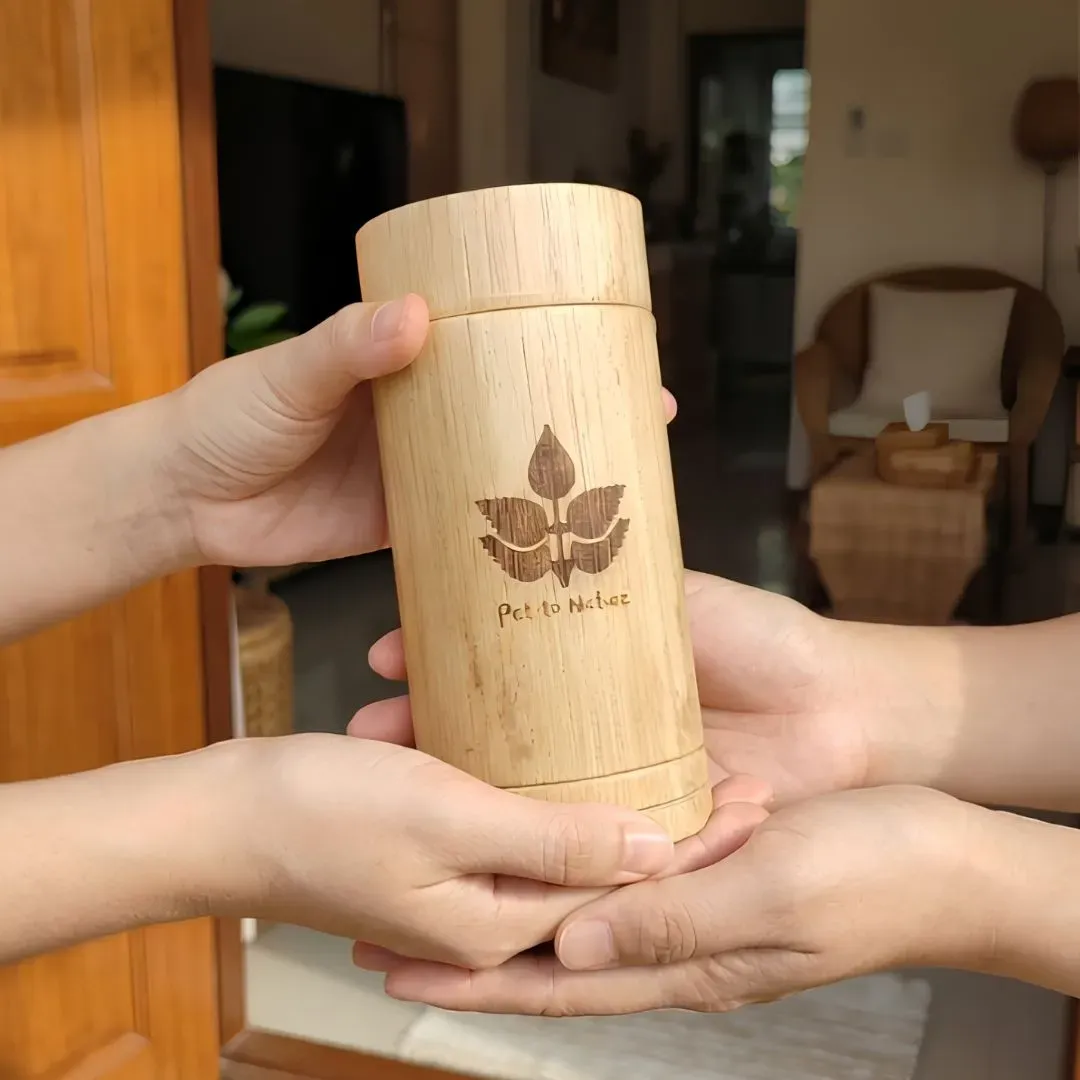
In the end, bringing home the memorial remains is not simply about collecting an urn.
For many families, it is the moment when their beloved companion finally comes home one last time.