
Are the Ashes Returned to Us Really From Our Own Pet?
When a family chooses Pet Aquamation for a beloved pet who has passed away, there is one question that may feel difficult to ask, but it is an important one:
“How do I know that the ashes returned to me truly belong to my pet?”
As someone who has worked in the pet industry for more than 15 years, I understand that asking this question does not mean a family is being distrustful.
It simply reflects how deeply they care about their pet.
After years of living together, families naturally want to know that the memorial remains they bring home have been handled correctly from the moment their pet is picked up until the remains are finally placed into an urn.
That is why, in Pet Aquamation, the technology itself is not the only thing that matters.
Just as important are identification, traceability, documentation, and chain of custody throughout the entire aftercare process.
Can Pet Aquamation Remains Really Be Traced Back to One Pet?
In services where individual memorial remains are returned to the family, a professional aftercare provider should have a system that allows the pet’s identity to remain traceable throughout the entire process.
This means identification should not stop when the pet is first received.
It should continue through stages such as:
Pickup → Intake → Storage → Aquamation → Drying → Bone Mineral Processing → Urn Preparation → Return to the Family
This system is commonly referred to as traceability and forms part of the chain of custody.
The purpose is simple:
to ensure that the pet’s identity remains connected to the process from beginning to end.
What Is Chain of Custody in Pet Aftercare?
Chain of custody is a system of records and controls that documents how a pet is handled at each stage of the aftercare process.
In professional pet aftercare, this may include:
Pet name or identification
Family name
Unique identification number
Type of service selected
Intake time
Storage location
Scheduled process
Internal transfer records
Verification before aquamation
Verification after processing
Urn or memorial package information
The purpose is not to make the process unnecessarily complicated.
Instead, it helps reduce the risk of human error and makes the entire process more transparent.
Why Is a Unique Identification Number Important?
A pet’s name alone may not always be enough.
Imagine a facility receiving several pets named Milo, Mochi, Snowy, or Coco on the same day.
For this reason, an aftercare facility with a strong traceability system should not rely only on names.
Each pet may be assigned a unique identification number or code when they are first received.
That code can then be connected to:
Family information
Service type
Processing documents
Storage area
Aquamation process
Memorial remains
Final urn
With a system like this, identity can be checked repeatedly throughout the process.
What Happens After the Aquamation Process Is Complete?
Pet Aquamation uses a process known as alkaline hydrolysis, which combines water, alkali, controlled temperature, and circulation to process organic tissue.
After the process is complete, what mainly remains is bone mineral.
Those minerals then go through additional stages before they are returned to the family.
In simple terms:
Aquamation Complete → Bone Minerals Checked → Dried → Processed Into a Finer Form → Identity Verified → Placed Into an Urn
Because Pet Aquamation does not use combustion, the word “ashes” is technically a simplified term.
The final material is more accurately described as processed bone mineral remains, rather than ashes produced by fire.
However, the word “ashes” is still commonly used because it is easier for families to understand.
Can the Ashes Ever Be Mixed Up?
In any process involving human handling, the possibility of error can never honestly be described as zero.
That is exactly why families should not only ask:
“Is this private aquamation?”
They should also ask:
“How do you identify and track my pet from beginning to end?”
A professional provider should be able to explain the procedure clearly.
The stronger the identification and documentation system, the lower the risk of mistakes.
Trust should therefore be based not only on reassuring words such as “don’t worry,” but on procedures that can actually be explained.
What Is the Difference Between Private and Communal Aquamation When It Comes to Returned Remains?
This is one of the most important distinctions for families to understand.
Private Aquamation
In a private service, the process is designed so that the pet’s memorial remains can be identified and returned according to the selected service.
However, families should still confirm what the provider means by the term “private.”
Ask how the facility defines private aquamation and how separation and identification are maintained throughout the process.
Communal Aquamation
In communal aquamation, multiple pets may be handled under a shared service arrangement according to the facility’s procedures.
Because the service model is different, individual memorial remains are typically not returned in the same way as with a private service.
Policies vary between providers.
If bringing home your pet’s individual memorial remains is important to you, make sure the selected service specifically includes individual return.
Do Not Only Ask “Private or Communal?”
The service label matters, but there is a deeper question worth asking:
“How do you make sure the memorial remains returned to me belong to my pet?”
This helps families understand whether the provider has a clear operational procedure or is simply using reassuring marketing language.
A professional provider should be comfortable explaining the process without making the family feel uncomfortable for asking.
What Systems Can Help Protect a Pet’s Identity?
Different facilities may use different systems.
Some common identification measures may include:
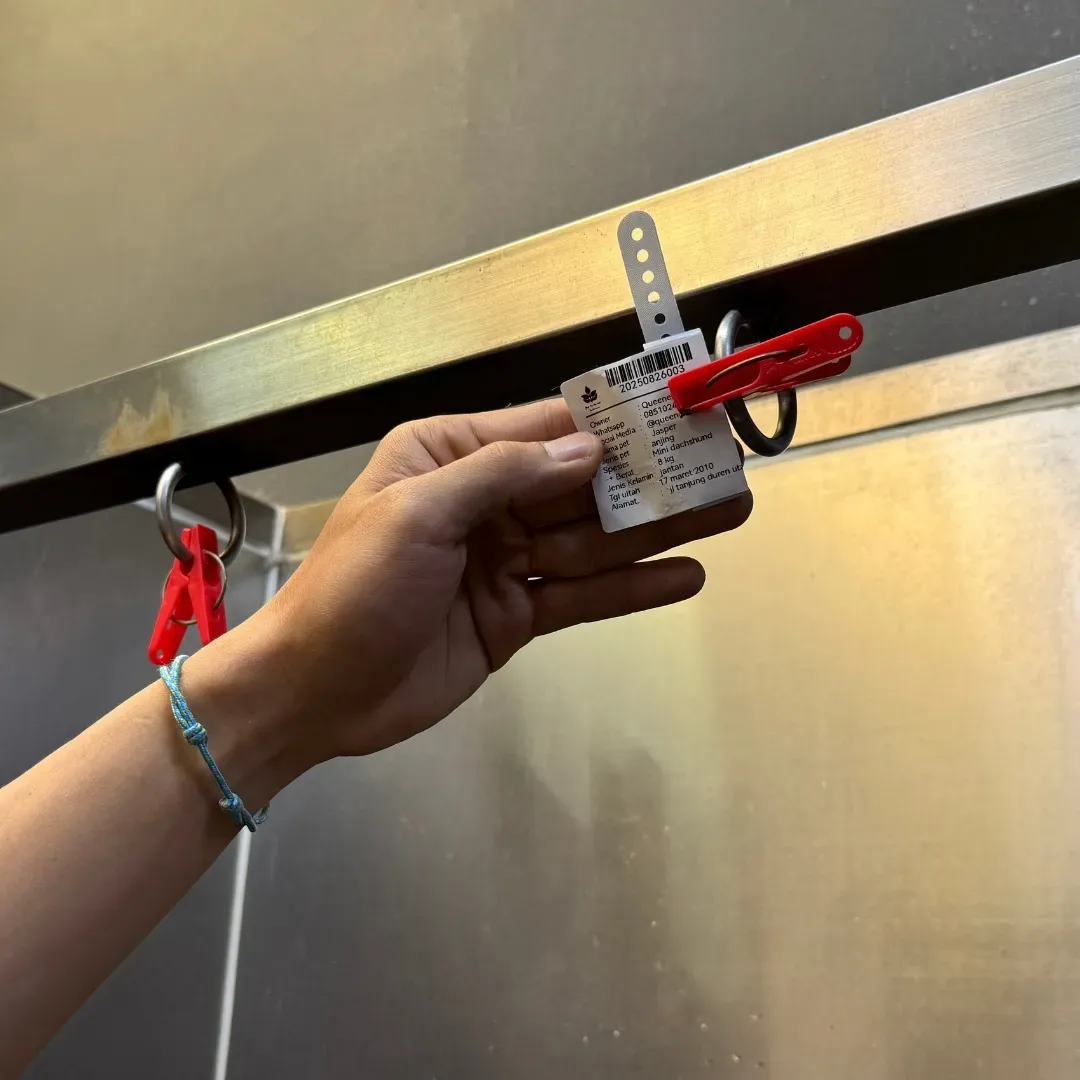
1. Identification Tag
The pet is assigned a tag or unique code when received.
2. Digital Record
The pet’s information, family details, service package, and processing stage are recorded electronically.
3. Physical Documentation
Intake forms and internal documents may accompany each stage of the process.
4. Verification Before Aquamation
The pet’s identity is checked again before the process begins.
5. Verification After Processing
After processing and before the remains are placed into the urn, the identity is verified again.
6. Urn Identification
The final urn or packaging is matched to the pet and family information.
The less the system depends solely on human memory, the stronger the traceability process can be.
Can Families Ask How the Tracking System Works?
Absolutely.
Asking about tracking is not excessive.
A family is trusting an aftercare provider with someone they deeply loved.
It is reasonable to ask:
How is my pet identified?
Is there a tracking number or code?
Who performs the verification?
At which stages is identity checked?
How are the bone minerals tracked after aquamation?
How is the correct urn matched to the correct family?
How do private and communal procedures differ?
A transparent provider should be able to explain these steps in a simple and understandable way.
Can Families Ask for Documentation of the Process?
Policies vary from one facility to another.
Some providers may offer internal documentation, photographs, process reports, certificates, or other forms of transparency documentation.
However, these practices are not identical across all providers.
Before choosing a service, ask:
“What documentation will I receive after the process is complete?”
It is better to understand the system before the service begins rather than asking only after the memorial remains have already been returned.
Why Is Transparency More Important Than Reassurance Alone?
When a family is grieving, hearing:
“Don’t worry, everything will be fine.”
may feel comforting.
But in professional pet aftercare, trust should not depend only on promises.
Trust is built through:
Identification systems
Clear SOPs
Documentation
Traceability
Communication
Clear explanation of service types
Defined procedures for returning memorial remains
For this reason, asking questions about identification is not a sign of being overly suspicious.
It is part of making an informed and responsible aftercare decision.
What Should You Ask Before Choosing Pet Aquamation?
Before agreeing to the process, families may want to ask:
Is the service private or communal?
How does this facility define private aquamation?
How is my pet identified when first received?
Does each pet receive a unique number or code?
How is identity maintained during storage?
How is identity checked before aquamation?
How are the memorial remains identified after processing?
How is the urn matched to the correct family?
What documentation will the family receive?
Can the tracking procedure be explained before the service begins?
The provider does not need to give the longest answer.
What matters more is whether the explanation is clear, consistent, and reasonable.
What If a Provider Cannot Explain Its Identification System?
Families have the right to consider that carefully before making a decision.
Not every operational detail needs to be publicly disclosed.
However, the basic process of:
identification → processing → verification → return
should be explainable.
If the only answer is:
“It’s definitely safe.”
or:
“There is no way it could be mixed up.”
without any explanation of the actual procedure, families may want to ask for more specific information.
In pet aftercare, transparency is a fundamental part of trust.
Pet Aquamation in Jakarta and Greater Jakarta: What Should Families Look For?
For families in Jakarta, Bogor, Depok, Tangerang, and Bekasi, pet aftercare options are becoming more varied.
Do not compare providers based on price alone.
Also consider:
Private or communal service
Identification system
Traceability
Pet handling SOPs
Facility transparency
Estimated processing time
Memorial remains return procedure
Urn and memorial package
Communication with the family
Price is important.
But when it comes to your pet’s final journey, trust in the process matters just as much.
So, Are the Ashes Returned to Us Really From Our Own Pet?
The most responsible answer is:
Families should not have to rely on assumption alone.
In a Pet Aquamation service that returns individual memorial remains, the provider should have a clear identification and traceability system that protects the connection between the pet, the process, and the remains eventually returned to the family.
That is why families should ask questions.
Request an explanation of the procedure.
Understand the type of service being selected.
And make sure the provider can explain how the pet’s identity is protected from the moment they are received until the moment they are returned home.
Because the urn a family brings home is not simply a container.
It holds something deeply meaningful.
A final physical connection to a beloved pet who once shared their life.
Families deserve the peace of mind that this final journey has been handled with respect, transparency, and accountability.